
An appreciation of film is all it takes to join this group. The 2026-27 season is our 28th year of celebrating the medium!
Our group meets at 7 pm, usually on the first Tuesday of each month from September through June, except December. We view the selected film on our own and then come together to discuss it. Typically about a dozen people attend. We gather on Zoom; the link is on our calendar: fpcpaloalto.org/calendar-of-events
We talk about character transformation, cinematic values, etc, plus our perspectives on the faith and ethical issues raised by the films. Our discussions are rich with multiple views and observations, as well as lots of laughs and caring, all enriching our relationships. We close with prayers of the people. New members are always welcome!
Here is our 2026-27 schedule, chosen through our election process in the spring.
| Sept 1 | The Unlikely Pilgrimage of Harold Fry |
| Oct 6 | Wake Up Dead Man: A Knives Out Mystery |
| Nov 3 | Eleanor the Great |
| Jan 5 | Famous Last Words: Dr. Jane Goodall |
| Feb 9 | Ordinary People |
| Mar 2 | The AI Doc: Or How I Became An Apocaloptimist |
| April 6 | A Different Man |
| May 4 | My Octopus Teacher |
| June 1 | The Manchurian Candidate |
Our next film will be:
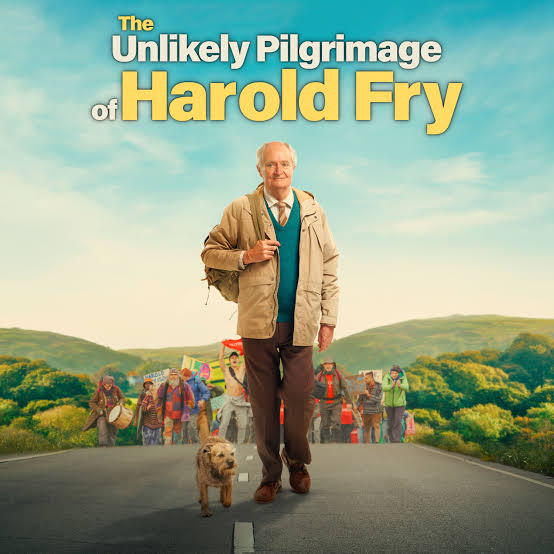
The Unlikely Pilgrimage of Harold Fry (2023)
Director: Hettie MacDonald
Availability: Libraries, Netflix, Amazon and other streaming services
Harry, a retired pensioner living with his wife in Devon in southwest England, receives a letter from his friend, Queenie saying that she’s dying of cancer and has entered hospice care in Berwick-upon-Tweed, in northeast England. Rather than sending her a letter, Harry decides to walk to Queenie believing that as long as he keeps walking, she’ll keep living.
This story is a genuine portrayal of pilgrimage. Harold feels compelled to make a long journey to a specific place. He embarks with minimal possessions. He experiences his days with a mindfulness he hadn’t before. He utters a mantra, “You will not die,”—perhaps speaking to Queenie, though maybe also encouraging himself. He has moments of self-doubt that bring him to the edge of quitting. He opens himself to hospitality—receiving it from strangers and offering it to others. He’s joined along the way by others and must discern when to separate from his fellow travelers to progress on his way. We also observe the simultaneous journey of Harold’s wife, who feels left behind and struggles to understand where she fits into her husband’s new pilgrim life.
As we observe Harold’s outer journey through the bucolic English countryside, along some busy roadways, and into the bustle of the occasional city—in flashbacks we also get glimpses into Harold’s difficult inner journey. True to the nature of pilgrimage, as Harold walks toward Queenie, we discover this journey of hope, forgiveness, and love is about so much more than reaching her.